moon phases affect sleep
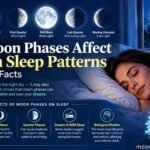
Many people experience restless nights, delayed bedtime onset, or vivid dreams without realizing the astronomical causes behind them. Scientific research confirms that moon phases affect sleep quality, deep sleep duration, and nighttime melatonin secretion. Understanding the relationship between lunar illumination cycles and human circadian rhythms helps you optimize your night routine and manage seasonal sleep disruptions effectively.
The Science Behind Lunar Cycles and Sleep Cycles
For centuries, human sleep patterns were dictated by natural celestial light rather than artificial electricity. While modern indoor lighting shields us from outdoor shifts, human biological clocks retain an evolutionary sensitivity to changing natural moonlight levels and subtle geomagnetic fluctuations.
During the nights leading up to a Full Moon, natural evening light increases significantly. Clinical sleep studies published by researchers via the National Institutes of Health (NIH) show that electroencephalogram (EEG) recordings during full moon phases reveal decreased deep sleep activity, lower nocturnal melatonin levels, and shorter total sleep times across participants.
How Each Moon Phase Disrupts or Improves Sleep
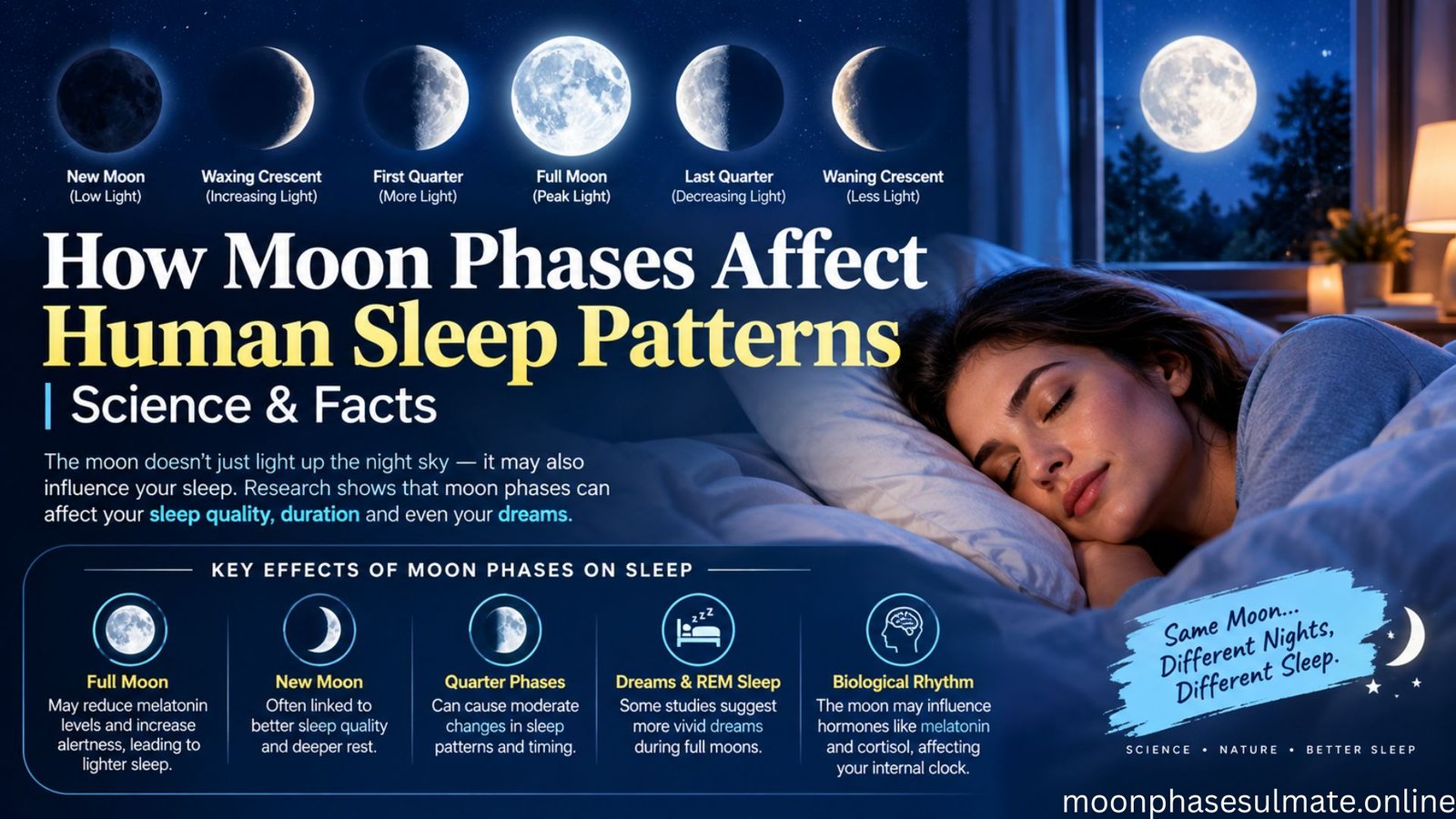
Different stages of the lunar month influence your body’s nervous system and hormone secretion in varying ways. Here is how nighttime rest changes across the four major lunar phases:
1. The New Moon Phase: Deepest Sleep and High Melatonin
The New Moon occurs when illumination drops to zero percent. Skies are dark, and nighttime ambient light reaches its lowest point. During this window, the pineal gland secretes optimal levels of melatonin—the primary hormone responsible for inducing deep, restorative sleep.
If you struggle with chronic sleep deprivation, the New Moon phase provides the most restorative recovery days for your nervous system. Deep REM sleep stages are typically longer during these dark nights.
2. The Waxing Moon Phase: Gradual Restlessness
As light accumulates from Waxing Crescent to First Quarter, natural evening brightness increases. The human body perceives this extra light exposure, which slightly delays natural sleepiness in the late evening hours.
You may find yourself staying up later than usual during the Waxing phase. Utilizing blackout curtains and minimizing blue screen exposure before bed helps counter these subtle shifts.
3. The Full Moon Phase: Full Moon Insomnia and Light REM
The Full Moon represents peak illumination and maximum gravitational alignment. Sleep researchers frequently document a phenomenon known as full moon insomnia during this phase. On average, people experience:
- A reduction in deep slow-wave sleep by up to 30 percent.
- A delay in falling asleep by 5 to 20 minutes.
- A total reduction in sleep duration by 20 to 30 minutes.
- An increase in REM sleep intensity, leading to more vivid dreams.
4. The Waning Moon Phase: Returning Sleep Balance
As the Moon enters its Waning phase, night skies grow darker once again. Cortisol levels normalize, deep sleep durations extend, and nighttime wakefulness decreases as your body prepares for the upcoming New Moon reset.
How to Manage Full Moon Insomnia Naturally
While you cannot alter planetary movements, adopting targeted evening sleep hygiene practices mitigates the impact of lunar insomnia:
First, install thermal blackout curtains in your bedroom to eliminate natural moonlight leaks. Second, lower room temperatures slightly on full moon nights to encourage natural core body cooling.
Third, combine your evening wind-down routine with complementary self-care schedules. If you are coordinating nighttime relaxation routines alongside hair and skin care, check our Best Moon Phase for Skincare Guide to optimize nighttime detox routines.
Using Real-Time Lunar Data to Track Sleep Habits
Tracking your sleep quality against exact lunar dates allows you to predict restless nights before they happen.
You can check our Live Moon Phase Today Tracker to view exact current illumination percentages, age in days, and lunar trajectories.
To align your entire daily lifestyle, hair growth trims, and relaxation habits with exact dates, consult our interactive Lunar Haircut and Beauty Calendar.
You can also check our comprehensive Moon Phase Haircut Calendar to plan daytime beauty routines around peak full moon energy windows.
For additional scientific reading on Earth-Moon gravitational mechanics and planetary orbits, explore the educational material available on NASA Science Exploration.
Good to see here